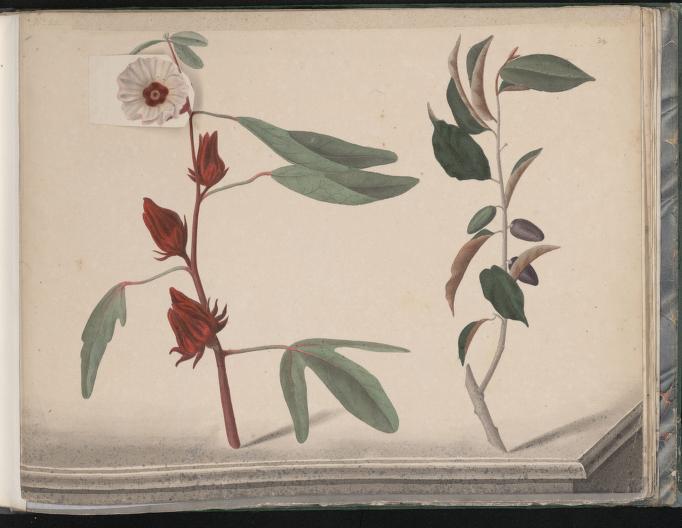
Madison Clyburn has written an essay entitled “Flowers, Forts, and Groves: Hidden Knowledge and Labour in de Rabié’s Flap Watercolours,” which you can read here. The essay discusses René de Rabié’s 1770 painting of the Roselle plant, a species transported from West Africa to the Caribbean through the transatlantic slave trade, using a unique “flap” technique to depict the plant’s flower in bloom. This method, which allows viewers to lift parts of the image to reveal hidden details, was widely used in 18th and 19th-century Europe for educational, moral, and entertainment purposes. De Rabié’s works, including his flap watercolours of plants and architectural plans in Le Cap, demonstrate how such interactive images could document and disseminate information, often concealing the critical knowledge and labor of enslaved people who made these projects possible.
Categories
Essay: Hidden Knowledge and Labour in de Rabié’s Flap Watercolours
 Hidden Hands in Colonial Natural Histories