Categories
Canada

Essay: McCord Visit Review

Mallory Novicoff has written an essay about her visit to the McCord Museum in February of 2023, which you can read here.

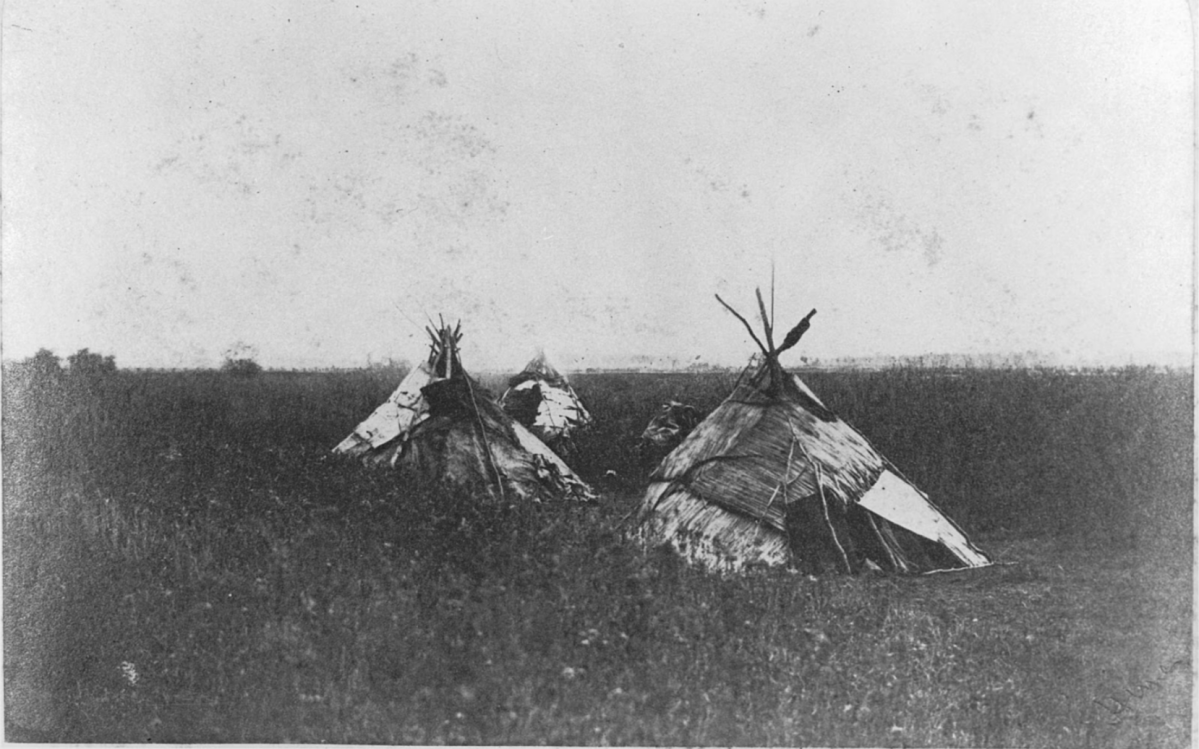
During her visit, Mallory examined early photographs of Western Canada from the Red River settlement, taken during the 1858 Assiniboine and Saskatchewan expedition led by Henry Youle Hind and photographed by Humphrey Lloyd Hime. The visit aimed to understand the Red River landscape, Métis and Anishinaabeg lifestyles, and the voyageurs’ navigation methods. Hime’s photographs provide invaluable insights into the mid-19th century life, architecture, and people of the Red River settlement, including portraits of Cree-Métis individuals. These images are significant for their historical and cultural value, they are early visual records of the region’s diverse inhabitants and their interactions.

Categories
Canada

Essay: Encounters: Judgement Based on Appearance

Mallory Novicoff has written an essay about Frances Simpson’s journey with the Hudson’s Bay Company, which you can read here.

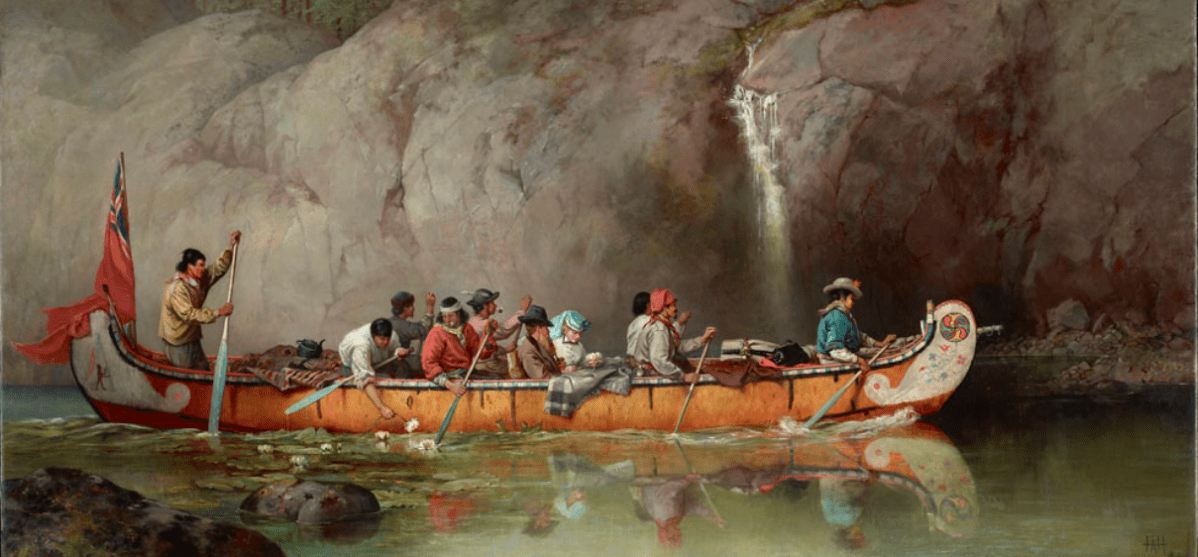
Frances Simpson’s diary provides a detailed account of her journey with the Hudson’s Bay Company (HBC), highlighting interactions with Indigenous peoples and reflecting on social dynamics in the Canadian West during the early 19th century. On May 2nd, her party received a warm welcome at the Lake of the Two Mountains by chiefs of the Iroquois, Algonquin, and Nepisang tribes. Simpson’s observations often included descriptions of the people’s appearance and dress. Her interactions with Indigenous and Métis women were strained. The arrival of British women like Simpson disrupted the customs of the fur trade, and caused an increase in the rarity of marriages to country wives. Simpson’s account of her journey, which concluded at the Red River settlement, is marked by both the hardships of travel and the kindness of HBC men. Despite the physical comforts of her new home, she experienced loneliness and homesickness. The isolation described in Simpson’s diary shows how the arrival of British women in the Canadian West underscored increasing class and racial distinctions.

Categories
Sri Lanka

Essay: Sri Lankan Medical Manuscripts

Dr. Danister Perera has written an essay, which you can read here, about how, aside from their use as sources for medical history, Sri Lankan medical manuscripts can be used to revitalize traditional knowledge.

The essay discusses the significance of McGill’s collection of medical palm leaf manuscripts from Sri Lanka, acquired by Dr. Casey Wood. These manuscripts, dating from the seventeenth to nineteenth centuries, are being scanned and cataloged. They are culturally significant, and a lot has gone into their preparation, inscription, and conservation. The content of the manuscripts covers various medical topics, astrology, rituals, and Buddhist texts, and studying them can provide insights into the history of medicine and cultural practices in Sri Lanka. Despite debates on repatriation, the focus remains on preserving and studying the content.

Categories
Canada

Essay: Biography of Frances Simpson

Mallory Novicoff has written an essay, which you can read here, about the life of Frances Simpson (1812-53), one of the first British women to travel across Canada in a canoe.

When she was a child Frances Simpson’s father lost his estate, and control of the people he enslaved, in British Guiana, so Frances grew up in a modest situation. Despite this, she was able to gain knowledge of botany, which would later be reflected in her diary. She married her cousin, George Simpson, a high ranking official in the Hudson’s Bay Company who was already in an unofficial partnership with a “country wife,” a Métis woman named Margaret Taylor. Frances’ diary documents her journey from Britain to Canada, as well as her expeditions in Canada. It provides valuable insights into the social history of early Canada, detailing the challenges of the journey and showcasing the reliance on Indigenous guides and voyageurs.

Categories
Haiti

Essay: Biography of Jacquette Anne Marie Rabié Paparel de la Boissière

Dr. Victoria Dickenson has written a biographical essay, which you can read here, about Jacquette Anne Marie Rabié Paparel de la Boissière, the eldest daughter of René Gabriel de Rabié.

Jacquette Anne Marie played a pivotal, but hidden role in preserving her father’s work in natural history. Born into a web of familial connections in Saint Domingue, Jacquette married Claude François Paparel de la Boissière, a military captain, and became a widow early in her life. She played a significant role in her father’s natural history work, attempting to preserve his collection amidst the upheavals of the French and Haitian Revolutions. Her resilience and dedication to her father’s legacy endured through her struggles with health and financial difficulties until her death in 1820.

Categories
Haiti

Essay: The Albums of René-Gabriel de Rabié

Dr. Victoria Dickenson has written an essay, which you can read here, that provides a comprehensive account of the preservation and history of René Gabriel de Rabié’s collection of watercolor drawings.

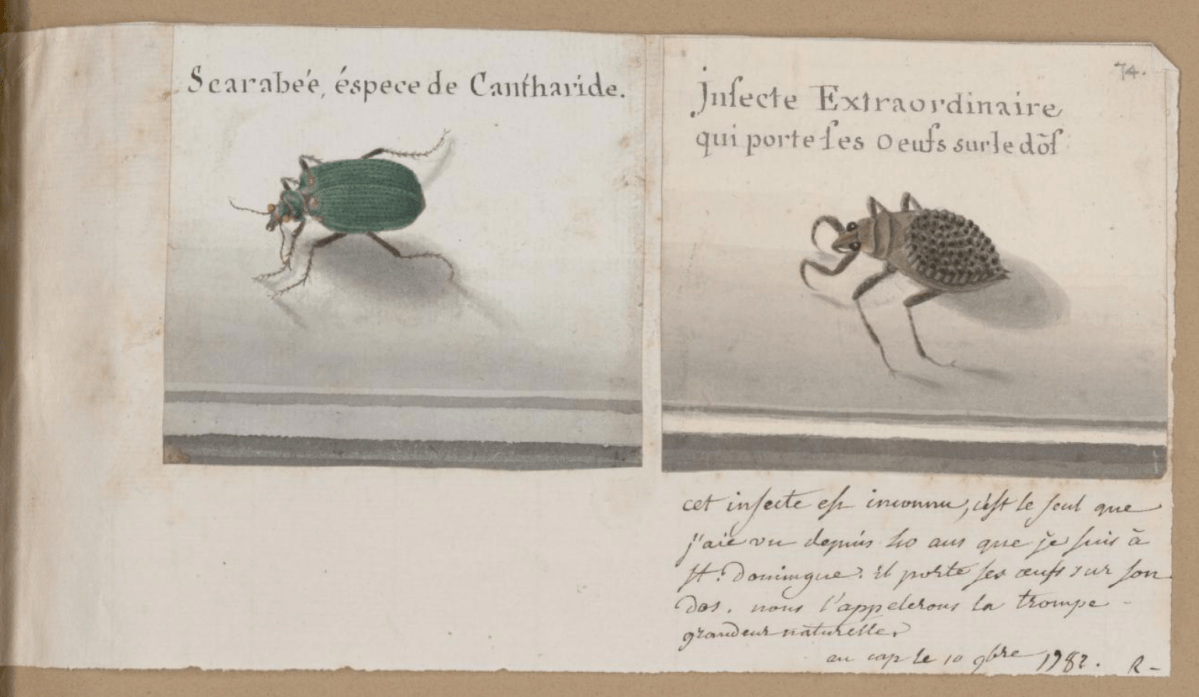
The watercolours were painted between 1767 and 1784 in Saint Domingue, and depict various aspects of natural history. Despite enduring numerous upheavals, including revolutions and wars, the collection remained intact. It was eventually acquired by Casey Wood in 1930, and is now in McGill University’s Blacker Wood Natural History Collection. The meticulous annotations and preservation efforts suggest a collaborative family project, possibly involving de Rabié’s grandson, Armand Gabriel Paparel de la Boissière. The essay traces the journey of the collection, highlighting its significance and eventual public accessibility thanks to the efforts of Dr. Casey Wood.

Categories
Sri Lanka

Photo Essay: Sri Lankan Collection at the Redpath Museum

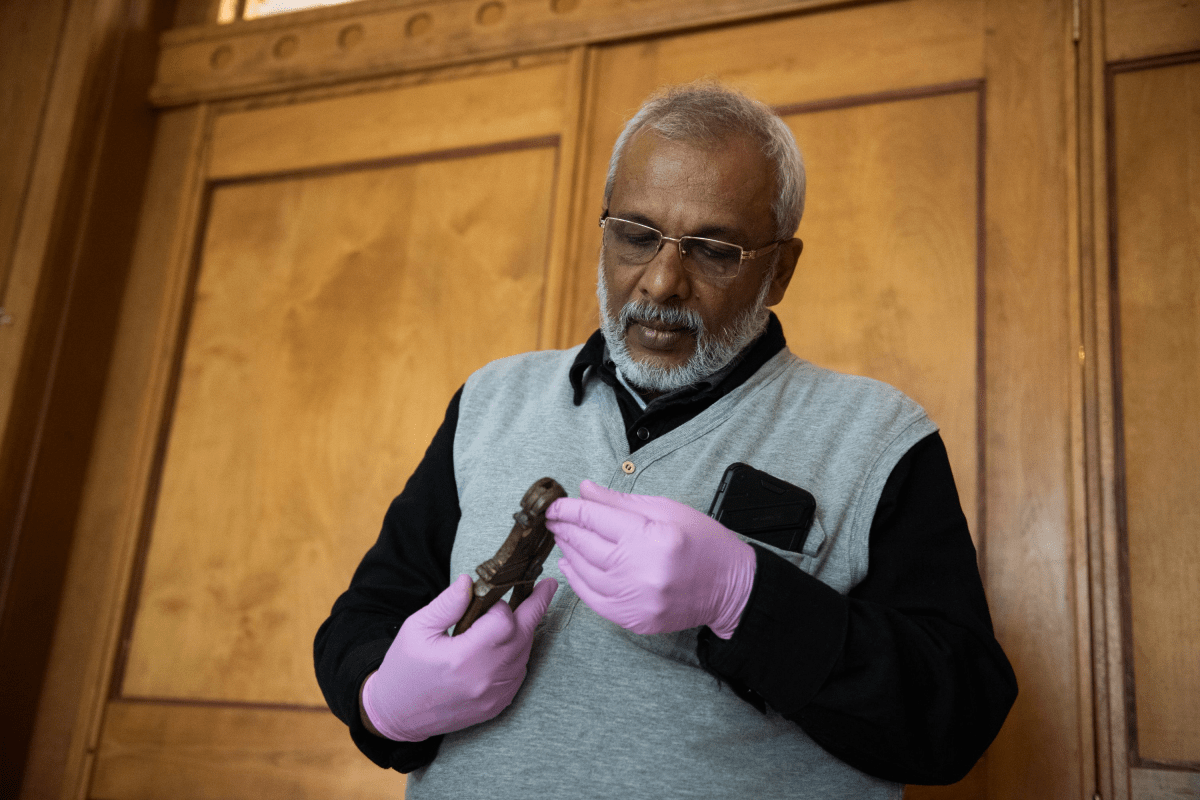
Dr. Anna Winterbottom has written an essay to accompany photos of Dr. Danister Perera’s visit to the Redpath Museum in October of 2023 taken by Alex Tran. You can read the essay and see the photos here.

Dr. Perera viewed the Redpath Museum’s collection of Sri Lankan artifacts, most of are related to traditional Sri Lankan medicine, and which were acquired in by Dr. Casey Wood in the 1920s and 30s. Dr. Perera advised on the organization, conservation, and digitization of the artifacts. He demonstrated how one would use a stylus to write on ola leaves, and discussed what these olas were historically used for. Aside from the olas, Dr. Perera viewed other items in the collection, which includes ivory and rock crystal spectacles, a dagger, small knives, lime cutters, and containers.

Categories
Haiti

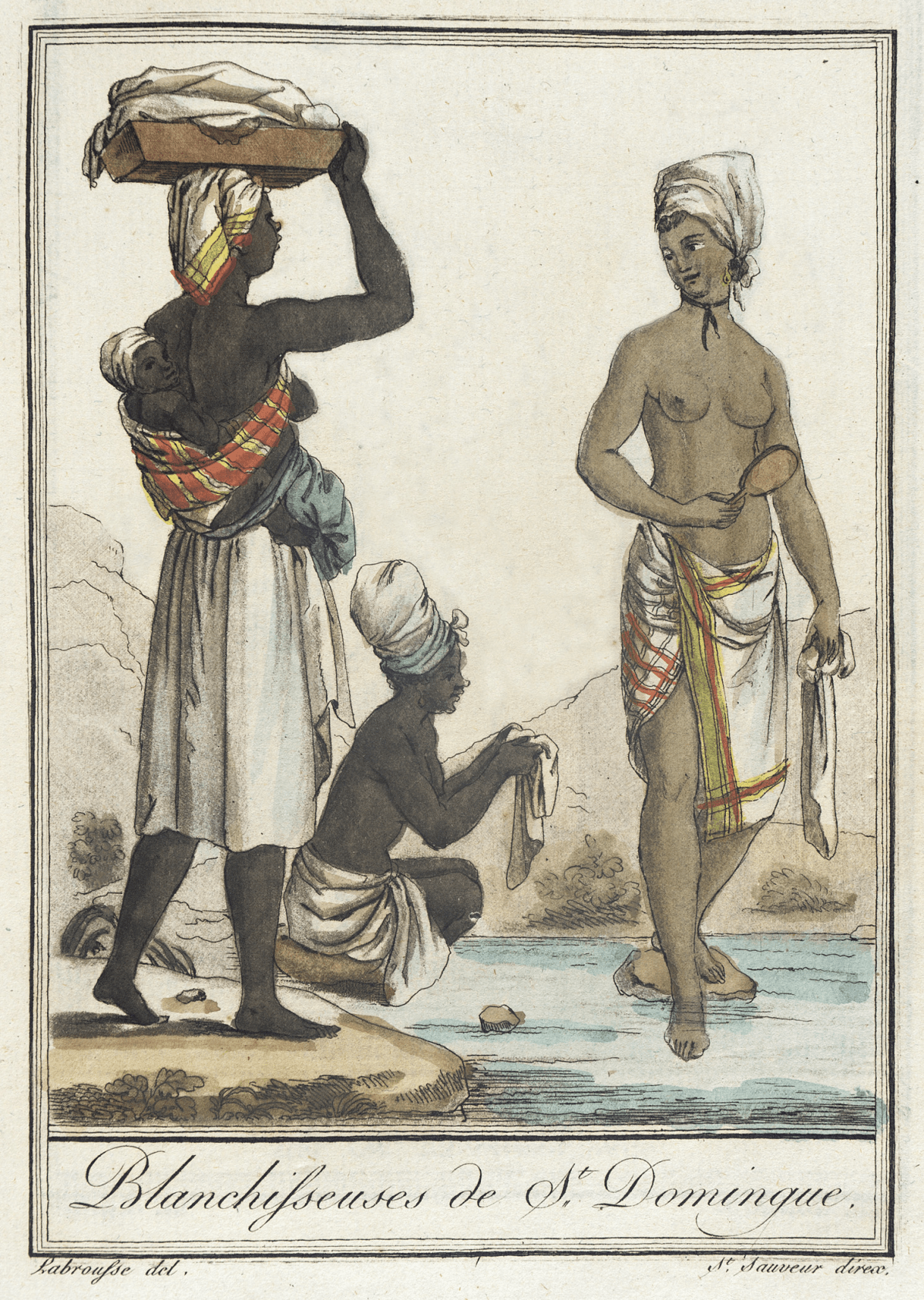
Essay: The French Colony of Saint Domingue from 1665 to 1804 

Dr. James E. McClellan III has written an essay, which you can read here, about Saint Domingue from the years 1665 to 1804.

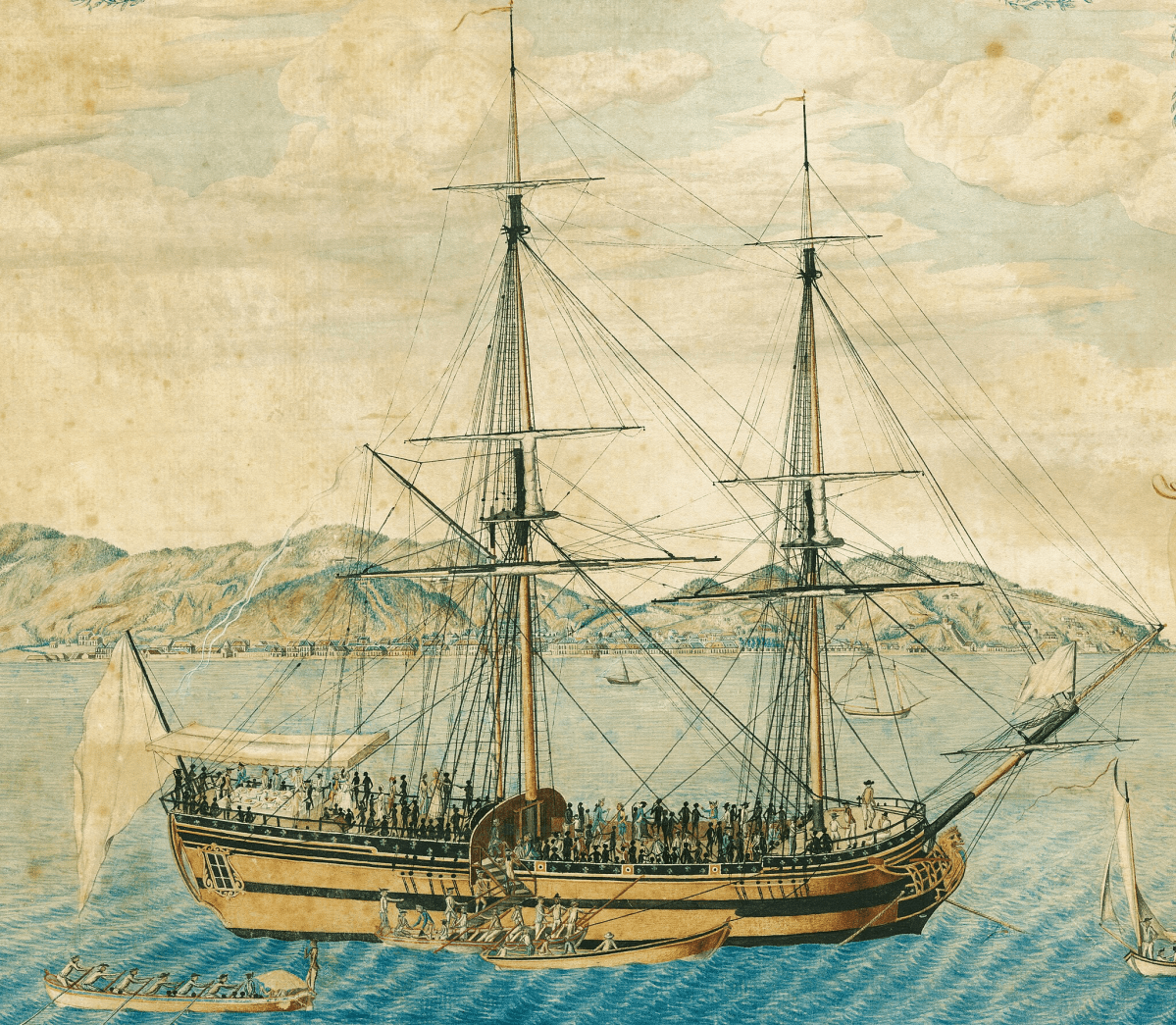
The essay discusses the rise and fall of Saint Domingue, a French colony on the western part of Hispaniola, which was once the wealthiest and most productive European colony, fuelled by intense slave labor primarily in sugar, coffee, cotton, and indigo production. It explores the historical context of colonization, the brutality of slavery, and the economic significance of the colony to France. The essay also highlights the role of specialized knowledge and institutions in colonial development, focusing on René de Rabié, a royal military engineer who contributed extensively to scientific endeavours, particularly in botany and natural history. Despite its economic prosperity, Saint Domingue’s reliance on slavery ultimately led to its demise, culminating in the Haitian Revolution and the creation of the Republic of Haiti.

Categories
Haiti

Essay: The Collections of René-Gabriel de Rabié

Dr. Victoria Dickenson has written an essay, which you can read here, about the posthumous fate of René Gabriel de Rabié’s collection of natural history specimens and drawings from Saint Domingue.

After de Rabié’s death in 1785, his daughter engaged a specialist to inventory the collection, which included mineral specimens, shells, framed butterflies, and even a specimen of a three-toed sloth, among other items. Although the collection of physical objects has disappeared, the watercolour drawings made by de Rabié in Saint Domingue have been preserved and are now at McGill. De Rabié’s daughter tried, to no avail, to sell the drawings to the state in 1811. She or her son later had the collection bound into four albums, but it would be a century until they were acquired, through a British antiquarian bookseller, by Dr. Casey Wood for the Blacker Wood Library in 1930.

Categories
Haiti

Essay: De Rabié Living in a Slave Society

Dr. Victoria Dickenson has written an essay, which you can read here, about the slave society of Saint Domingue that the de Rabié family lived and participated in.

The essay examines the life of René Gabriel de Rabié and his family in 18th-century Saint Domingue, focusing on the families interactions with and reliance on enslaved people within the context of a slave society. It explores how the de Rabié family, despite not owning plantations themselves, benefited from and participated in the system of slavery through ownership of enslaved individuals who served in their household and supported their personal and professional endeavours. The essay also delves into the broader societal dynamics of Saint Domingue, highlighting the extensive use of enslaved labor in various occupations and the integral role enslaved individuals played in the construction of infrastructure and the economy.