Recovering Lost Voices
Women’s contributions to natural history collections and their responses to the natural world have historically been overlooked. This case study explores how we might use diverse materials to respond to silences in the archives, to reconstruct women’s engagement with the natural world, and to think about relationships, past and present, between settlers, First Nation, and Métis people.

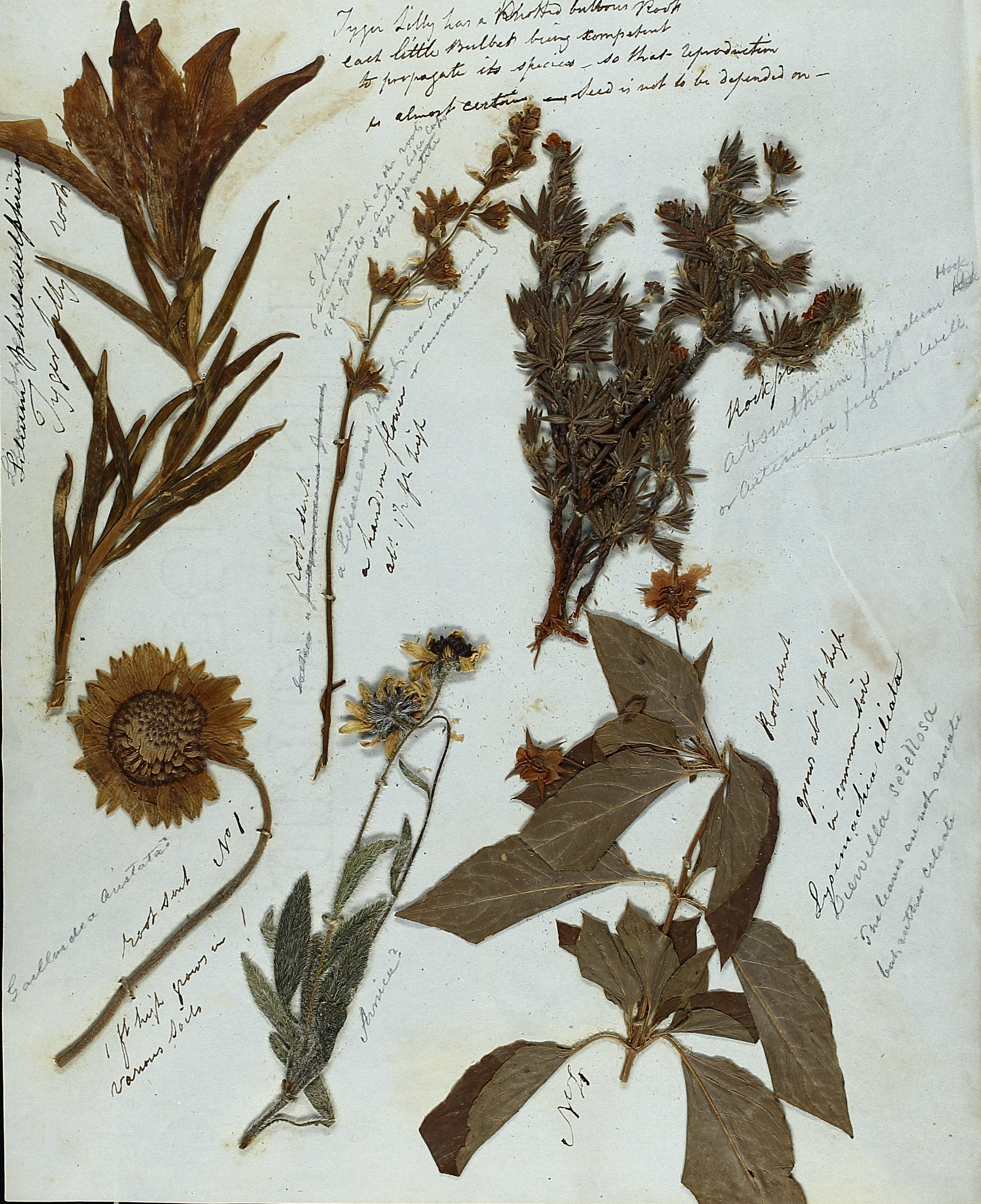
Collaborators will analyze the plants collected by Frances Simpson in 1830-31 in the Métis homeland, once known as Rupert’s Land. Simpson’s collection of dried plants is now in the McGill University Herbarium. In this collection, Indigenous and Métis voices are absent, aside from the occasional reference to an indigenous common name. Nonetheless, many of these plants were used locally for food or medicine. Despite the archival silence on the subject, Simpson would have been assisted in gathering these collections by local people. Working with respected Indigenous and Métis linguists with whom participants have pre-existing relationships, researchers will draw out lost meanings, including Indigenous and Métis names and uses of the plants.
The collaborators will also examine the botanical symbolism within Indigenous and Métis floral beadwork and embroideries, often hidden due to colonial repression of Indigenous spirituality. Researchers will also consider the aesthetic choices of the makers, including materials and colours used, and the iconography of the designs as well as the dynamic relation between abstraction and floral imagery. The findings will be presented through exhibitions, public programs and art installation.
 Hidden Hands in Colonial Natural Histories